Moving into beta

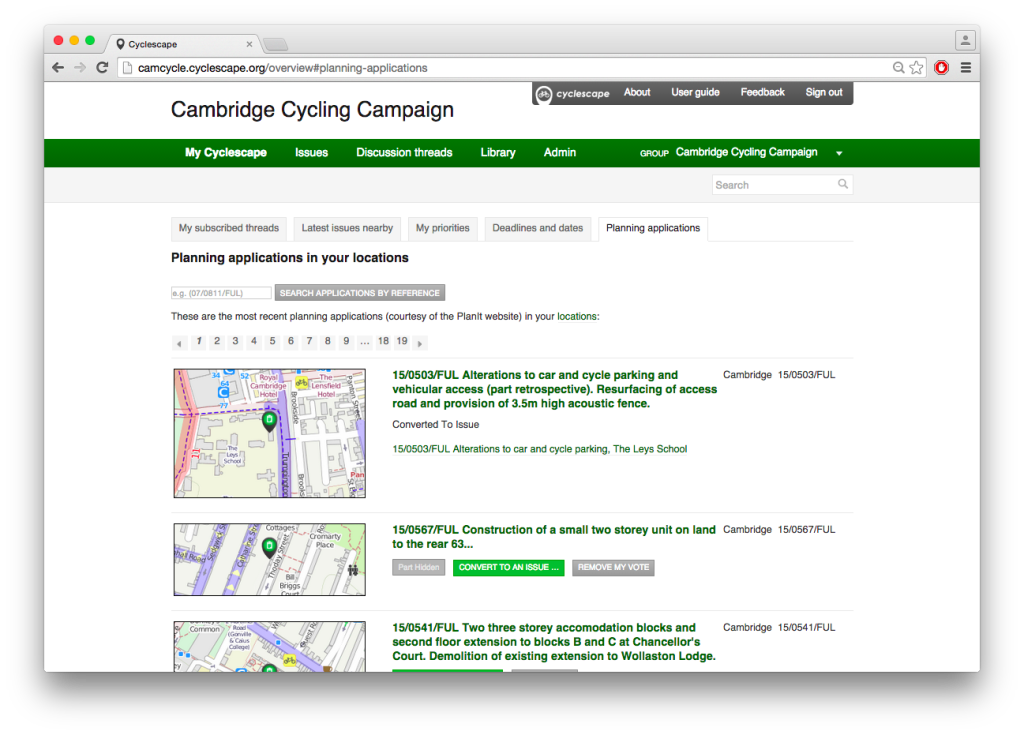
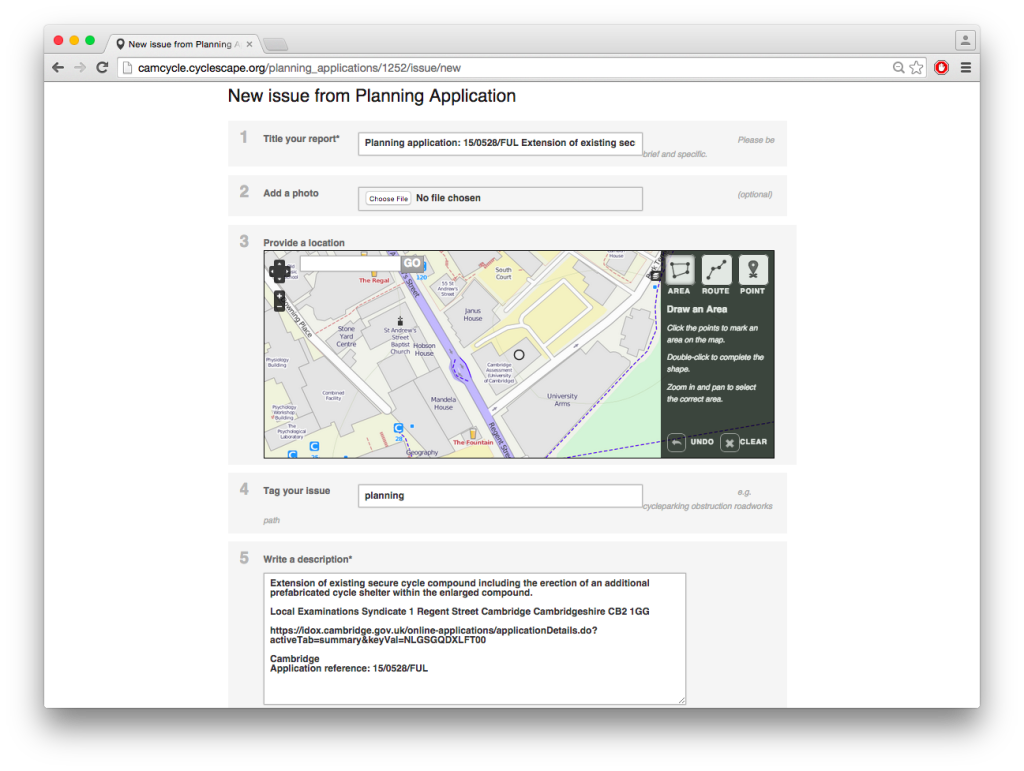
We’re approaching our beta phase now, with testing of a closed early beta starting today by members of one of our stakeholder groups.

Our designers, Supercool, have been working hard on the overall design and page templates, which we’re merging into the code this week.

Thanks to the hard work of our developers Andy and Andrew, core functionality is pretty-much all in place now, and it is being hooked into the design work that is now flooding in. (Some of the more ancilliary areas, such as importing of existing Photomap data, haven’t been started yet so we can get testing going more quickly.)

They've also been adding a lot of tests and other deployment infrastructure which ensures that the system is robust and easy to deploy.

Our timescale has slipped about one month, due to the amount of functionality going in and some questions on some of the assumptions we made earlier on (see below), but progress remains good. More technically-minded people can follow our code repository to see changes each day.

What’s in place now?

Lots! Most of the core concepts and functionality is now in place:

  • Logins and user profile
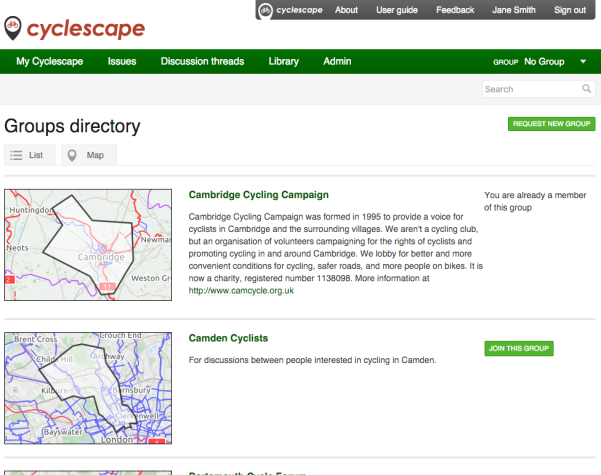
  • Users and group management
  • Issue submission (though not photos yet)
  • Core geographical basis (limitation of issues to specified areas)
  • Issues
  • Listing of threads to issues
  • Point/line/polygon basis of issues
  • Thread discussions
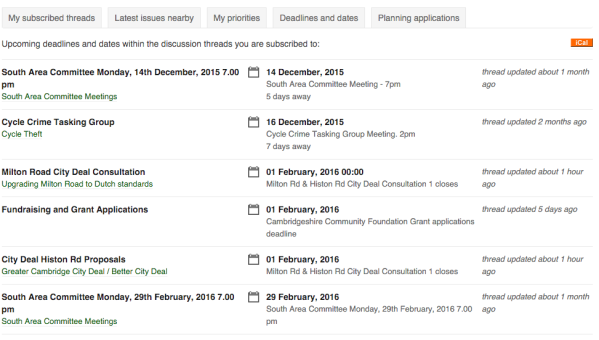
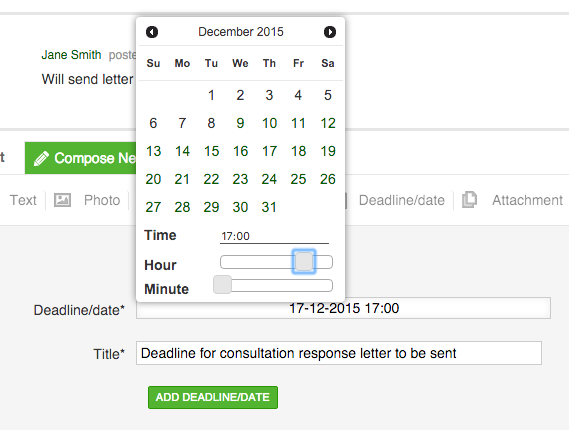
  • Deadlines
  • Multiple message types (e.g. comment/photo/link/deadline/library)
  • Subscription
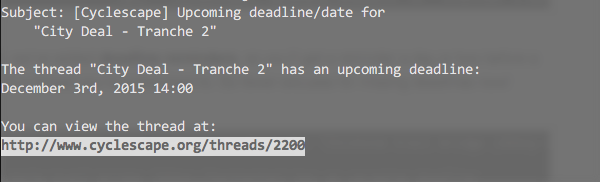
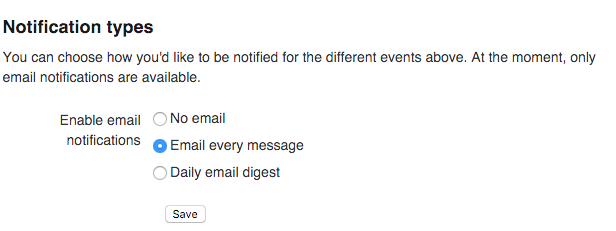
  • Subscription by e-mail
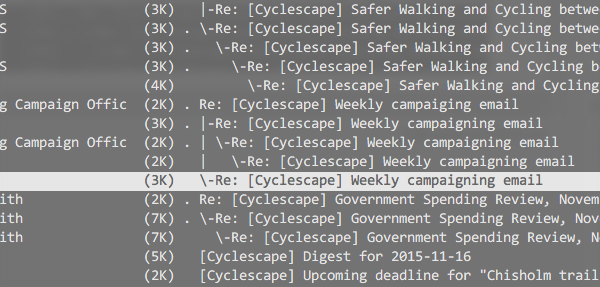
  • Replies by e-mail (mail-to-web gateway)
  • Resource library (though not all types done)
  • User location management (e.g. ‘my areas’)
  • Dashboard
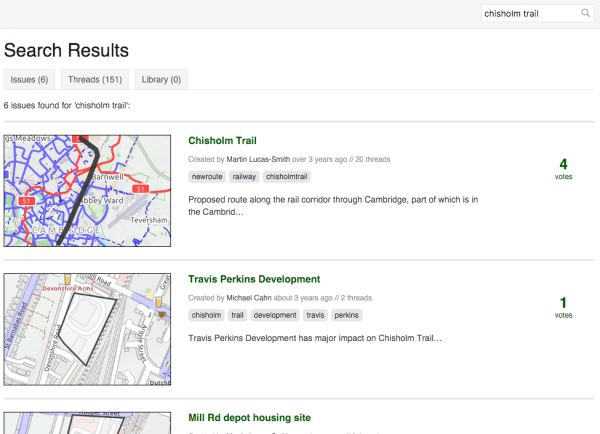
  • Listing of issues by ‘my areas’, by subscription, by involvement
  • Privacy (public/private) for groups and per-message
  • Tagging
  • Thread discussion context (group-based, ungrouped)
  • System feedback

These will need tweaking during the integration of the design templates and the results of testing.

Innovation: testing assumptions

What the early beta testing programme, and work until Christmas, will deal with, are testing and refining the key areas of innovation.

There have been interesting debates amongst the development team which has challenged some of the assumptions in the spec. Some of the differences have boiled down to how much users want to be involved with campaigning issues. We've resolved this into three general levels of involvement:

  • The light user, who wants to browse discussions, and perhaps is only interested in something that directly affects them
  • The involved user, who perhaps has certain specialist knowledge (about their local area or particular technical knowledge on certain infrastructure themes)
  • The super-campaigner, who is perhaps a Committee member and wants to view and be able to comment on almost everything

For instance, the spec assumed that people would be automatically subscribed to everything in their area, meaning that if their main profile settings enabled e-mail delivery they would get a huge amount of stuff. That would definitely suit the super-campaigner profile, but for the light user that would be information overload. So we are considering more fine-grained, but still user-friendly, ways in which ‘subscription’ as a concept is defined.

The other big area of discussion has been about the group basis and how this conflicts with a user-centric approach. The system has always been intended as a toolkit for campaign groups, not a general UK-wide discussion forum. The social context here is that cycle campaign groups act as a corporate voice for cycling issues in an area, and people working together with a group structure and norms helps the long-term basis of campaigning.

But people are sometimes members of more than one group (as the spec recognises) and different groups want different kinds of privacy in their discussions. By contrast, a user just wants to see things they’re interested in, whichever group is discussing them. So in the coming weeks we’ll be working through exactly how the interface can resolve this tension between user-centric and group-centric perspectives.

The three areas that we’re working through are:

  • What subscription means exactly (just a listing, or actively seeing discussions?)
  • E-mail subscriptions (auto-subscription, receive replies, and how threads get started)
  • Group basis (how this affects the user interface and subdomain URLs, and how people can be sure who they’re talking to).

Thankfully, we’re using Ruby on Rails, which is designed to assist with agile development issues like these!

Design screenshots

Stay tuned for news on design screenshots..

Work in progress: Alpha report

Last week we reached the alpha phase of our project.

An alpha (which comes before a 'beta') is the stage of development where the fundamental concepts and much of the underlying structures of the system are in place, but the interface isn't ready and many features aren't in place or finished.

In the coming weeks as we move to the beta, we'll have screenshots and more details.

We've submitted our Alpha progress report which describes process in more detail. There are a few screenshots, but they should not be taken as in any way indicative of the final system - they just have some basic layout to enable code testing.

Designer needed! – Cyclescape design brief

Download this design brief as a PDF.

We are seeking a talented designer with strong web-application user interface abilities to undertake design work for the new Cyclescape website. Timescales are tight. Cyclescape is to be a website (currently under construction) aimed at helping cycling groups around the UK. The work will involve the creation of an overall design concept, plus user interface templates for each of the user pages, and an icon set.

(This contract is for design, not programming. A team of coders are already working on the programming.) 

It is being created by CycleStreets, a not-for-profit social enterprise who run the UK cycle journey planner at www.cyclestreets.net. Programming is already underway.

The site is a grant-funded project, funded by GeoVation. GeoVation is an Ordnance Survey initiative and forms part of the Ideas in Transit project with funding from the Technology Strategy Board and the Department for Transport.

About Cyclescape

Cycling conditions in the UK need to be improved massively. Cycle lanes that end unexpectedly, roads shared with lorries, non-existent cycle parking, etc.. Any cyclist can give you a catalogue of problems that need tackling in their town or city. The end result is far fewer people cycling than there should be.

Cycle campaign groups are key to changing this. These groups – large and small, national and local, are the people on the ground who work make cycling better.

Cyclescape is to be a comprehensive online campaigning toolkit to assist cycle campaign groups around the UK. In the words of one supporter, it should be "a hugely important step forward for all cycle campaigning groups". We're working to provide groups with a really great, useful and user-friendly system that will save a lot of time and effort.

The project’s blog at http://blog.cyclescape.org/ contains more details and progress reports.

Turning cycling problems into solutions

Overview of functionality on the site

Some of the things the new system will be able to do are:

  • Enable members of the public and campaigners easily to pinpoint where cycling is difficult
  • Enable simpler and more focussed discussion based on specific issues, groups of issues, or themes
  • Enable best practice to be 'pulled-in' to discussions, by providing off-the-shelf examples shared from elsewhere in the UK
  • Help groups prioritise what to work on
  • Enable groups to include Council contacts in these discussions if they wish
  • Pull in planning application data automatically, so that potential issues needing attention are readily accessible
  • Automatically notify and involve people who cycle through an area – who therefore have an interest in seeing issues fixed
  • Make geographical data such as collision data and accessibility analysis easily available, to provide context
  • Enable groups to assemble 'solution' resources so problems can be resolved on the ground
  • Give groups a variety of ways of publishing their activity on their website easily.

A more detailed two-page description of the site is available at
http://blog.cyclescape.org/images/ToolkitDescription.pdf

Timescale

We are keen to appoint a designer as soon as possible.

The site will become available to groups during December. We would like to have a design in place by late November (or earlier if possible). We realise this is a tight timescale.

Usability

The site will be used by cycle campaigners who have a wide range of technical abilities, many with little experience of web applications. Also, some of the users will be particularly heavy users. The interface therefore needs to be as self-explanatory and streamlined as possible.

Given the tight timescale, we expect more emphasis on graphic design rather than user interaction design. A designer should be knowledgeable about the latter, with a good understanding of usability and IA issues. The project’s manager from CycleStreets has good usability knowledge.

Mapping is a particular aspect where the site will need usability work, e.g. how to represent showing both ‘points’ and ‘areas’ together on a map). Specific ideas/knowledge in this area would help.

Design principles

The design and usability must:

  • Be attractive and clear
  • Contain plenty of whitespace: we don’t want a cramped design
  • Clearly guide a user through the workflow of the site
  • Appear open and welcoming to new people to join in the debate
  • Have a chrome design that is separable from the internal pages, so that the functionality is embeddable in other sites (see below).
  • Enable users to interact with maps easily
  • Be fast-loading, i.e. not image-heavy

Here are a few sites whose designs/UI we like. Obviously we are not asking for these in any way to be emulated, as design must be original, but this should hopefully give a flavour of the sorts of modern design approach we want.

Likely pages

The number one requirement is for the page template concept that sets the style and tone for the whole site. This is a 'from-scratch' project to create the "organisation’s" branding.

Here is a list of the main pages that will be produced. There will be some more, but not substantially so, and we would expect to be able to adapt the finished design to pages with new forms/content:

  • Main front page
  • Report an issue page (for submitting a problem location, with or without a photo)
  • Login page and account management pages
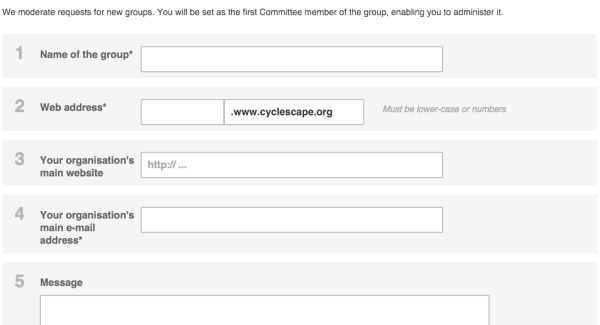
  • Register a group page (e.g. cycle group has their own discussion area)
  • User management pages (for the group’s Committee)
  • Issue page, showing a reported problem
  • View all issues on a map
  • View issues by listing
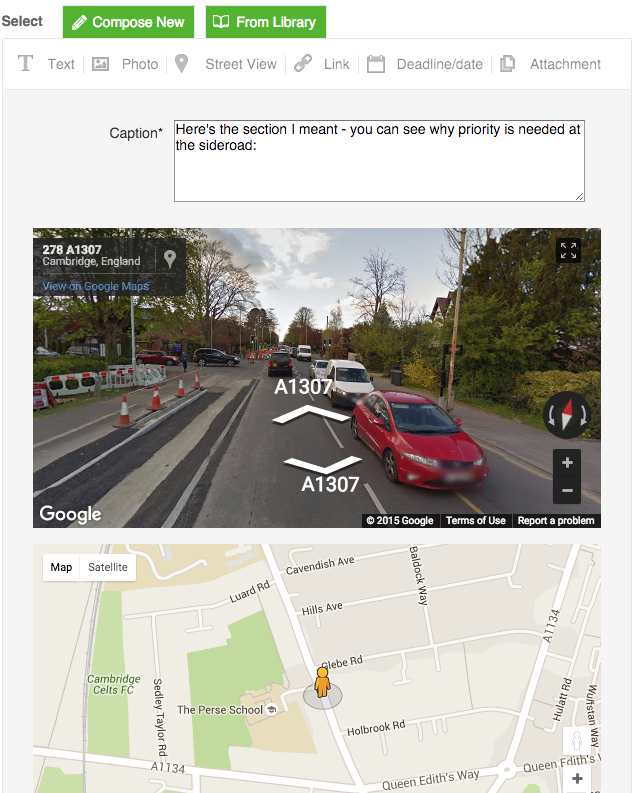
  • Forum-like ‘thread’ page, where a reported issue is being discussed. This will need to include the concept of blocks of info that can be ‘pulled into’ the discussion, with just a summary shown. Users can then click to ‘open out’ an info block to reveal more info.
  • User dashboard
  • ‘My issues’, showing all the issues they are discussing
  • Help/documentation pages
  • Gallery page showing several photos
  • An HTML e-mail with a reply by someone else to a discussion the user is subscribed to
  • Pages where ‘info blocks’ (basically shareable resources) can be created (wizard-like format)
  • Listing of info blocks

If you can design a logo also that would be additionally useful. If not, we will seek a volunteer but obviously the logo and design will need to have unity.

We would not expect all of these pages to be created at once, but would see these as being worked through, with a few done initially to ensure the concept works well.

Ability for groups to embed Cyclescape in their own websites as a web application

A complication of this site is that it should be possible in future for cycle campaign groups to embed the Cyclescape site as a web application forming part of their own sites. This would mean that the site chrome is not present, but the primary navigation and other functionality should be. We are prepared for some compromise on this as time is tight, and would welcome thoughts in your application.

By way of example, CycleStreets has created these sites which show how its journey planner is embeddable in other sites. (The web application code determines which site chrome to use based on the URL.) Note that the internal design/layout is the same, except for slight font changes.

Technical requirements

We would prefer a designer who can supply finished XHTML/HTML5 and CSS2/3 templates, although if you do not have well-developed skills in that area we can do the conversion from Photoshop.

We are happy to consider progressive enhancement techniques that have reasonable browser support. For instance, we would be happy for gradient buttons to use CSS gradients (with a solid colour as fallback) to be used rather than an image background.

By way of background, the site is being coded using Ruby-on-Rails, jQuery and OpenLayers.

Applications

Please contact Martin at info [at] cyclestreets.net by midday on Thursday 3rd November if you are interested to bid for this work, outlining your interest, comments on any aspects above, your existing portfolio and your proposed fee level and availability timescale.

Do not send any design mock-ups with your application. We are strongly opposed to design-on-spec and any such applications will be binned.

Applications will be considered on an equal opportunities basis, i.e. on their merits alone.

Cyclescape Q&A

We presented the Cyclescape project to the Cyclenation/CTC conference in October 2011, to an audience eager to know how it will help their campaigns.

Here’s the presentation we gave, and scroll down for questions and answers.

 [and Text-only version]

Here are some of the questions we were asked, and answers to them.

1. How do I start a group in my area? What if I'm on my own?

Groups will go to a simple webform to apply for a Cyclescape site for their area. They can customise it in various ways.

A person on their own will also be able to create a new group for their area. They can then welcome others who live nearby, to join that group.

It is an explicit goal of the system that we help new campaign groups to spring up and provide them with resources to get them going easily.

2. Can there be more than one group covering a particular area?

Yes. There is no restriction on overlapping groups, as many areas have more than one campaign group.

Groups can, if they want, choose to campaign together. We hope that, over time, the system will help increase co-working between groups so that together they have a stronger voice.

3. How much information can groups share with each other?

Basically as little or as much as they want.

The default is that discussions are not shared, i.e. each group has its own area that is private. It is up to the people running each group to open things up beyond that if they want.

Groups can choose to make their discussions open-access if they wish; they can control who is added as a member of their group; and they can choose to share particular discussion threads if they wish.

The library of best practice will contain national and local examples. The national ones are usually shared. This will mean that a group can publish how they solved a particular campaigning issue, or share best practice photos and documents.

4. In our city we have a problem that the council put in "Pinch Points". They won't listen to us -  how can this system help?

Firstly, the system will help identify who will benefit by its removal, by seeing who cycles through the area, so that you can increase the number of people who can push to make the council change its view. We know this can really make a difference as our campaign in Kingston Street in Cambridge did exactly this (only we had to work out manually who these people were!).

Secondly, the system will automatically suggest examples from elsewhere around the country where the problem has been solved. It will only need one group to create a resource about this.

Thirdly, the system could also provide evidence of where a compromise has been achieved. Our experience in Cambridge, for instance, is that pinch points of 3.1 to 3.9 metres cause the most problems.

The system will basically help you build the best possible case for removing the pinch point, as easily as possible.

5. I'm keen to get involved with Cyclescape but the technology scares me, are you running any tutorials or workshops that can help me get started?

It is a strong aim that the system is self-explanatory and easy to use.

We shall also provide online guides to explain how to get started, and we'll think about organising a workshop, perhaps at another conference where we can demonstrate the system.

6. How does the sharing of best practice work?

Groups can create resources which describe how particular successes have been achieved.

Groups can add photos of good and bad practice. The existing library of over 30,000 photos from CycleStreets will also be available in the system.

Groups will also be encouraged to construct summaries of national/local policy documents, which will be well-categorised (by tagging with key words). This will help other campaigners nationally find out what guidance exists quickly and be able to quote it. This will mean that discussions on, for instance, cycling in pedestrian zones, would automatically pick out the key guidance, show photos and newspaper reports from where it has been achieved, etc.

We want to expand the photographic aspect of the system to create full galleries and downloadable high-quality images of best practice and are seeking funding to expand the system to include this.

7. Is it free?

Yes, groups can create a Cyclescape site for their area completely free of charge.

This is possible thanks to a grant of £27,000 that we obtained from GeoVation. We recognised when applying for this grant that groups all around the country face the same problems, but that few groups have much funding. It therefore made sense to create a campaigning platform that all could use, to avoid the need to reinvent the wheel continually.

8. Will it use the same username / password as cyclestreets.net to login?

We haven’t yet finalised that issue. However, we are hoping so.

9. Will it need further funding in the future?

The system is intended not to require ongoing funding.

However, our initial grant does have a shortfall, and we are hoping to add some additional advanced features in the light of feedback during our consultation over the summer. We need around £10-20k for this, so if you know of a potential source of funding that would help fund sharing of best practice, please do let us know.

The system is open source and so we are going to be working to get people involved from the cycling community who can help with the development.


What’s the Cyclescape of your city like?

We’re pleased to announce the name of our new cycle campaign group toolkit:

Cyclescape

We had over 70 suggestions (including some humorous ones), many of which were excellent ideas.

It became clear that many of the best ideas started with Cycle, and we liked the idea that the name would be co-branded with CycleStreets, i.e. Cycle-s-something.

We also thought it was particularly important to emphasise the geographical aspect of cycle campaigning. We thought that inventing a new word, Cyclescape would be a catchy and unique brand that emphasises the idea of improving the landscape for cycling across our towns and cities.

Having fixed on a shortlist, we began the process of trying to obtain domain names. This took a surprising amount of work as we wanted to ensure we got all the variants (.com/.net/.org) by way of brand protection.

Unlike three years ago when we bought the name CycleStreets, many Cycle+ names have now been taken and reserved by domain brokers. After approaching some domain holders, it was clear that some of the best names were going to be prohibitively expensive, in the thousands of pounds, which was well beyond an already-tight budget.

In the end we spent more than we wanted to acquiring the name, but we’re very pleased with it. We hope you like the name too!

Cyclescape.net is currently under development and we’ll be setting up a blog there shortly. @Cyclescape will also be the site’s Twitter identity, so do follow that also.

Andy and Andrew, our developers, have been making excellent progress. Many of the core concepts of the site are in place, so we’ll have screenshots of  the system at ‘alpha’ phase in the next few days. If you’re a coder, follow the code work in progress on Github.

Now we need a logo…

Now we need a logo! We like the idea of a curved section of city, with markers on and a bicycle going upwards. Anyone able to help with that?

Cycle campaign toolkit: introducing our developer team

GeoVation

Progress on our cycle campaigner toolkit is steaming (pedalling?) ahead! Coding work began on Monday, and will continue solidly for the next few months.

The development of the toolkit has been possible thanks to our GeoVation award, which secured us £27,000 of funding. GeoVation is an Ordnance Survey initiative and forms part of the Ideas in Transit project with funding from the Technology Strategy Board and the Department for Transport.

We're pleased to introduce our developer team, Andy Allan, Andrew France, plus myself (Martin Lucas-Smith) from CycleStreets as project manager. Andy and Andrew will be working in it on solidly for the next few months so that a large amount of development can be done.

We're also approaching various designers and design companies for the work on the design and information architecture aspects of the project.

Andy Allan is a freelance developer and cartographer, specialising in all things related to OpenStreetMap. He is the creator of opencyclemap.org, the award-winning map for cyclists used by hundreds of websites and mobile applications, along with his recently developed transport map. He has helped develop the technology that powers OpenStreetMap including the online editor, Potlatch2, and is a member of the OSMF Operations Working Group. Andy lives and works in London but prefers cycling elsewhere.

Andrew France is an experienced web application developer specialising in Ruby on Rails. A generalist by nature, he is just as happy designing intuitive front-end interfaces and writing JavaScript as he is constructing database schema. Andrew has worked on a variety of systems from charity sites to hazardous chemicals management and always looks forward to implementing new ideas. He is a keen traveller, cyclist, runner, and imbiber of ale.

Martin Lucas-Smith is one of the two lead developers of CycleStreets. He'll be project-managing the toolkit project and getting involved in the Rails coding in the latter half of the project. For CycleStreets, Martin tends to deal with non-routing code and structure of the CycleStreets codebase; he also deals with most of the CycleStreets project management so that fellow developer Simon can concentrate on the complex routing work. Martin's actual job is as a Web Developer at the Department of Geography , University of Cambridge.

Get involved in an exciting open source project!

The toolkit is to be developed as an open source project, with the code on Github. It will be written using the technologies of Ruby on Rails (v3.1), PostgreSQL, and jQuery.

Volunteers are needed to contribute to the code from the end of October. If you'd be interested, do let us know.

We're aiming to build a project team who will develop and look after the system from December onwards. By that stage, the grant-funded development work will mean that the system is already fully-featured and well coded so should be in a good state to add functionality to.

Timeline

We'll have:

  • Screenshots of our 'alpha' available by 21st October.
  • A beta available to a few campaign groups around Christmas. If your group would like to be a 'guinea-pig', do let us know! We'll start to open it up to more groups in the month following.
  • General availability of the site after a period of bugfixing, scaling and iteration.

Stay tuned to this blog and our Twitter feed for updates.

We're also seeking an additional grant of around £10k to enable us to undertake solid coding on some of the more advanced features that groups have suggested, particularly do deal with more complex issues like cross-group sharing, which will increase the utility of the system considerably.

Designing the toolkit

We held our first developer meetings this week to develop the specification further and do some wireframing:


Cycle campaign toolkit – spec

We're pleased to publish an updated specification for the campaigner toolkit, following consultation with groups and including further changes.

There's been lots of useful feedback submitted by e-mail, twitter, blog replies, and in meetings we've had. These comments were turned into about ten pages of bullet-points (165 points!) for working into the spec.

Many of the points raised were useful points for clarification, or small new features, and a few raised issues relating to group structure. There were no problems raised with the substantive direction and nature of the toolkit.

The Description of the toolkit and what it will do is still available and has not needed to be updated. However, the full detailed functional specification has been updated and is below.

We were delighted to receive various positive comments which very much reflect our hopes for the system. For instance:

"One great advantage I can see is that it'll potentially help balance out the workload within our cycle campaign by allowing the latest status on any particular issue to always be seen on the system. Getting more campaign member involvement will also help with our committee's workload."

"I like the push/pull options of mail list and forum. Can't think of anything you've missed. I'm hopeful that this will encourage common issues to do with rules or conventions to float to the top and be tackled at source."

Things that have been updated or added in the spec, as a result of the consultation are:

  • Clarification of the idea of a 'Library' of best practice
  • Presence of tips to help best practice in campaigning
  • Specification of the polls and petitions components
  • Issues relating to federated/overlapping groups
  • Committee privacy basis
  • Notion of groups having democratically-agreed policy stances that members must adhere to
  • Clarifications about grouping and splitting of threads
  • Ability to involve elected Councillors rather than just officers
  • Tightening of a few areas regarding mail integration
  • Emphasis on outcomes rather than endless discussion
  • Notion of cross-member 'recommended campaign' topics
  • Daily digest
  • Removal of the notion of a compromise objective, which could undermine a group's negotiating position
  • Addition of avoidance of uploading very large volumes of documents, which could create costs
  • And various other minor changes

The latest version of the specification is available. It is now a living document that incorporates updates in the light of implementation as we move into the coding/design phase.

A draft Module structure (work in progress) which describes an implementation of the functional specification, is being finalised. This will form the basis of the developers' work.

We need a name for our campaigning toolkit!

Since we won £27,000 for the development of our campaigning toolkit we've been pondering what to call it.

The themes we want to capture in the name are:

  • The idea of a central place where cycle users around the UK can submit problems they encounter on the street network
  • A central place to facilitate campaigning
  • Cycling (!)
  • Collaborative
  • Well-informed campaigning
  • Constructive and forceful debate but without being adversarial
  • Improving our streets and routes
  • Keeping track of all the problems and being able to manage them effectively
  • The ability to say "I'll report it on the … website" and write "Go to … to report/fix a problem"
  • Name needs to be short and catchy - long names are harder to type in

Here are some initial ideas we've had, though not all are usable names - it was just a brainstorm. We're not really happy with any of them. Can you help suggest a catchy name? Leave a comment below or drop us a line.

  • Helping campaigners campaign …
  • BetterBiking
  • CycleStars
  • CityRevolution
  • CyclingSorted
  • CycleTrac
  • CycleTicks
  • Complain.com
  • Cyclocracy
  • Cyclington
  • HelpThem2HelpUs
  • CyclingUpTheAgenda
  • CycleTherapy
  • CycleTraction
  • CycleActive
  • CycleActivist
  • Cyclamity
  • CycleUnison
  • CyclingIntelligence
  • CycleLand
  • PeletonPeople
  • CyclingBestPractice
  • PracticalPeople
  • CycleMyths
  • CycleBugs
  • CycleLeague
  • CycleLeaders
  • RideLeader
  • BikePatch
  • BikeFettling
  • BikePatch
  • Agenda4Change
  • PathRoute
  • RidePatch
  • PatchNetwork
  • PathStreets
  • StreetPatch
  • StreetStrategy
  • Strategy4Streets
  • StreetFocus
  • RouteStrategy
  • RouteToCommute
  • RouteShare
  • StreetLever
  • CrowdedStreets
  • CrowdedOut
  • StreetCrowd
  • StreetVision
  • CycleTool
  • ToolForStreets
  • StreetsAhead
  • FeasibleAndDesirable
  • Note>Log>Act
  • StreetsShared
  • OnRampForCampaigners
  • Vent
  • CyclingSoldiers
  • CycleMission
  • CrowdsourcingCyclingIssues
  • CycleLinks
  • Collaborate

Cycle campaign toolkit – comments sought

As we announced recently, CycleStreets is one of the winners of the GeoVation contest, with our bid for a comprehensive online campaigning toolkit to assist cycle campaign groups around the UK.

The first phase of this project is finalising a specification for the toolkit. Here is the description of what it will do. This outlines what the toolkit will do, how people and groups will be able to use it. The full specification also has a prioritisation of these features.

We warmly welcome comments from groups around the UK on this draft, and will be publishing a further more finalised draft, incorporating comments received, in a week's time for our deadline of 24th July. Please do contact us to give us your views.

We've tried to include as many of the ideas we've received and come up with as possible. We hope the attached draft will give cycling groups an idea of how much the toolkit will assist their work.

We hope also its themes of bringing campaigners together and, where possible, involving Local Authority contacts will help usher in a collective spirit of work to improve cycling conditions around the UK.

Let us know your thoughts.

Older versions: